
Surface Quality for Cut Steel Plate
A part can be dimensionally correct but still need edge cleaning before use. Surface quality is controlled according to material, thickness and project requirements. Expectations are confirmed at quotation stage.
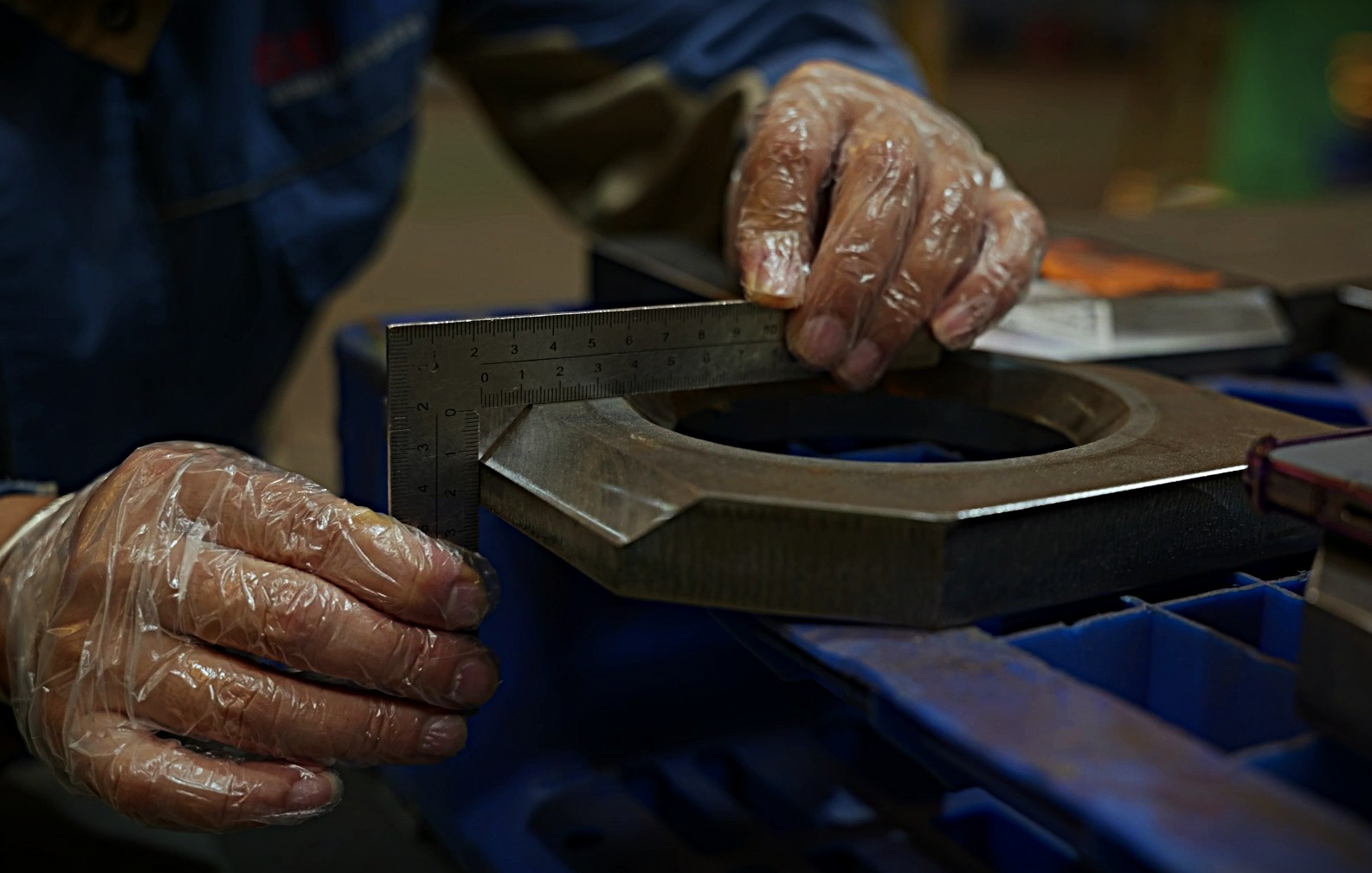
What buyers should expect by process.
Surface quality is controlled according to material, thickness and project requirements. Deburring, slag removal, grinding, or shot blasting are defined by the confirmed delivered-state requirement and quotation scope.
Laser cut edges
Typically cleaner edges with less slag than flame. Final edge condition still depends on material, thickness, and geometry — confirmed at quotation.
Flame cut edges
Typically rougher than laser. Slag removal is standard for flame cut parts. Grinding can be added when smoother edges are specified in scope.
Shot blasting only
Sa2.5 applies to shot blasting surface preparation for coating readiness — not as a general cut-edge finish claim. Quoted separately when required.
Final cutting capability depends on material grade, thickness, plate size, geometry, tolerance and engineering review.
What should be confirmed for the order.
Deburring
Sharp-edge and burr requirements are confirmed as part of the delivered-state scope where needed.
Slag Removal
For flame-cut parts, slag-removal requirements are specified according to the agreed edge condition and downstream use.
Batch Consistency
Inspection scope and sampling are defined for the batch so the agreed surface condition can be checked before packing.
Available on request.
Rust Removal & Sa2.5 Profile
Shot blasting for rust-free surface or coating adhesion profile (Sa2.5 when specified). Quoted separately.
Weld Preparation
Edge beveling for weld joint preparation. Available when confirmed in quotation scope.
Smooth Edge Finish
Additional grinding when a smoother edge is required. Specified at quotation stage.