
Laser or flame? Start with the finished-part requirement.
Thickness matters, but it is not the only decision variable. Material, geometry, holes, edge condition, tolerance, heat distortion, quantity and the next operation all influence cutting-method selection.
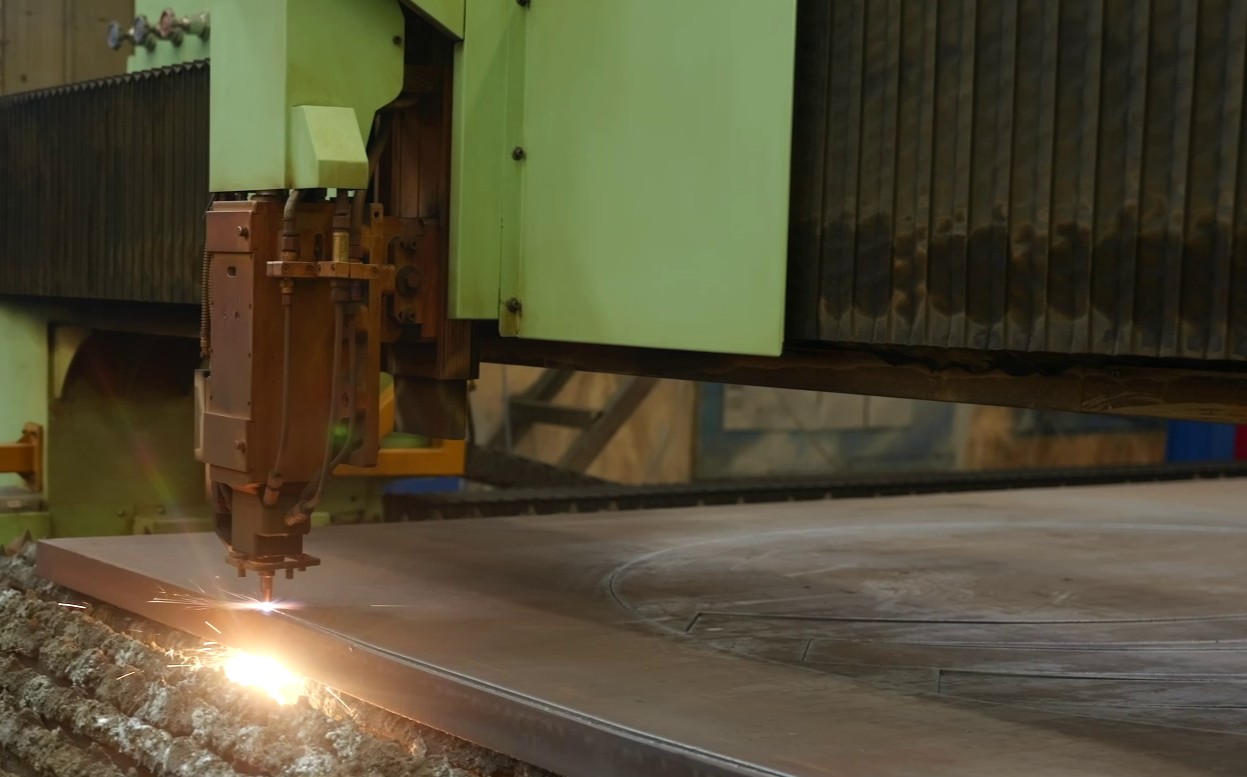
Use the process page after the method is selected.
Public ranges come from the capability source of truth; final feasibility still depends on the actual material and geometry.
Laser Cutting
Use where laser is a fit for the material, thickness, geometry, edge requirement and downstream process.
Explore →Flame / oxy-fuelFlame Cutting
Use for suitable carbon/low-alloy plate and heavy-plate requirements where thermal cutting and downstream cleanup are acceptable.
Explore →Decision supportCutting Method Selection
Owns the comparison question so laser and flame pages can focus on delivering the chosen process.
Explore →What changes the decision.
Material
Grade and condition affect process suitability and thermal response.
Thickness
Use the actual capability source of truth, then confirm project-specific feasibility.
Geometry
Holes, narrow webs, acute corners, long strips and nesting strategy can change the route.
Acceptance
Edge condition, tolerance and critical dimensions determine whether secondary machining or cleanup is needed.
Volume
Batch mix, common-edge or multi-torch strategies may affect production planning but not every project equally.
Next operation
Beveling, drilling, machining, welding or coating requirements should be considered before cutting is fixed.
Send the part requirement and let the method follow.
Include material, thickness, quantity, geometry, destination and the features that matter. YUNCUT can confirm laser/flame fit during manual review.