
Material identity is part of the delivered part.
Use material pages to confirm the requested standard, grade family, thickness and documentation — then connect that choice to the process, part geometry and inspection requirement. Cross-standard comparison is a sourcing aid, not automatic interchangeability.
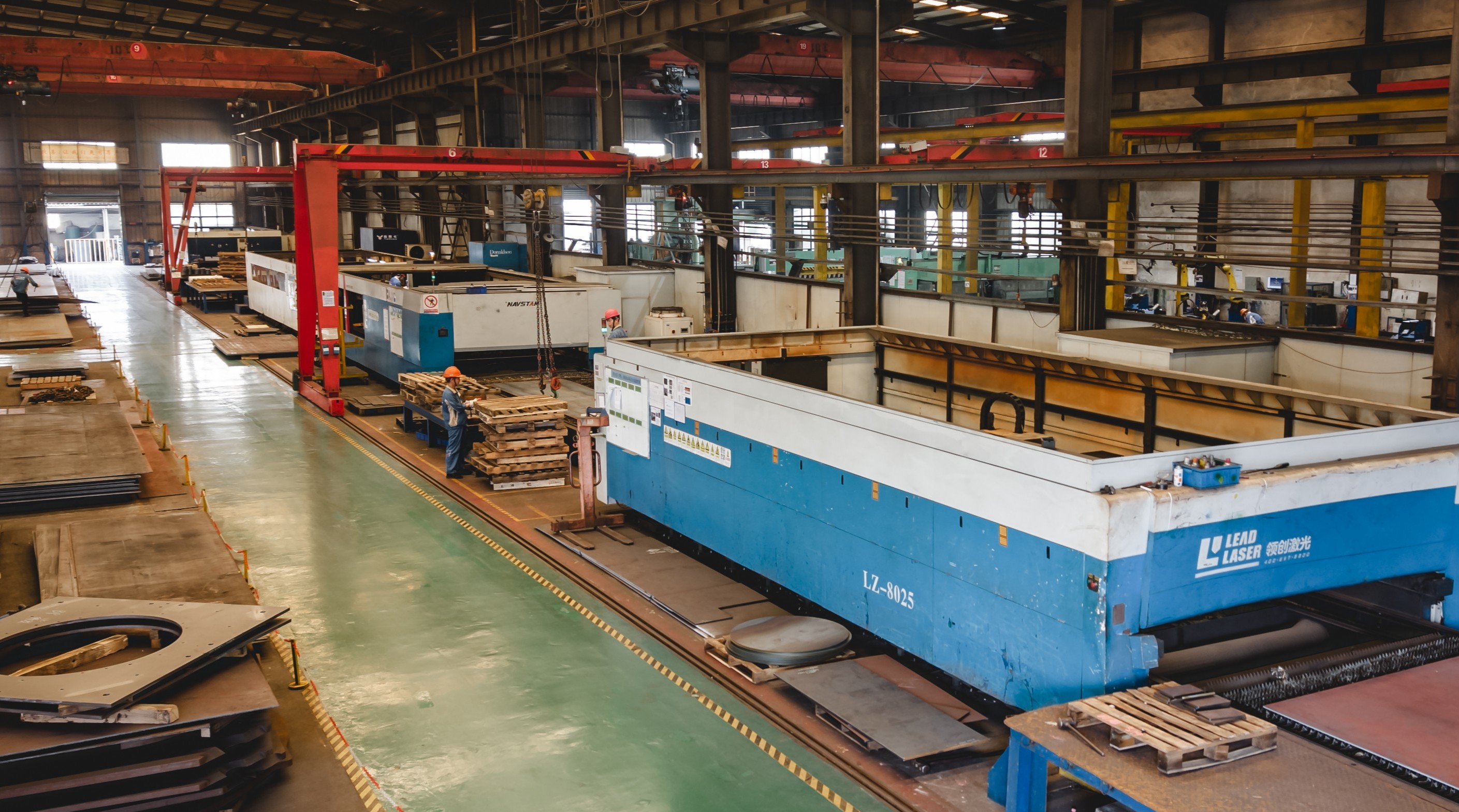
Choose the material path that matches the procurement question.
Each material page should lead to process fit, part examples, evidence and RFQ inputs instead of stopping at a reference table.
Carbon & Structural Steel
Common plate grades and subgrades for industrial parts. Specify standard, grade, subgrade and documentation instead of relying on shorthand equivalence.
Explore →Higher strengthHigh-Strength Steel
S460/S690/A514/Q690-family questions: sourcing, cutting, heat input, holes, edge condition and follow-on processing.
Explore →Abrasion resistanceWear Plate
Material selection for wear-related parts and liners, rebuilt around grade identity and application rather than generic “same as” claims.
Explore →Compare first. Substitute only after review.
Q355, S355, A572 Grade 50 and Japanese structural grades may be compared by buyers, but their standards, chemistry, mechanical properties, delivery condition and impact requirements are not assumed identical.
Move toward a purchasable part.
Material information becomes commercially useful when it points to a process, part family and acceptance route.
Browse Part Families
See how material requirements enter rings, frames and batch-cut plate parts.
Explore →ProcessReview Processes
Choose cutting and post-cut operations around geometry and acceptance needs.
Explore →EvidenceManufacturing Evidence
See how YUNCUT separates visible process evidence from engineering claims.
Explore →Know the grade but not the China-side equivalent?
Send the governing standard, grade, thickness, quantity, destination and application. Any proposed substitution should be explicit and reviewed.